Industrial Silencers

Vacuum Pump Silencers
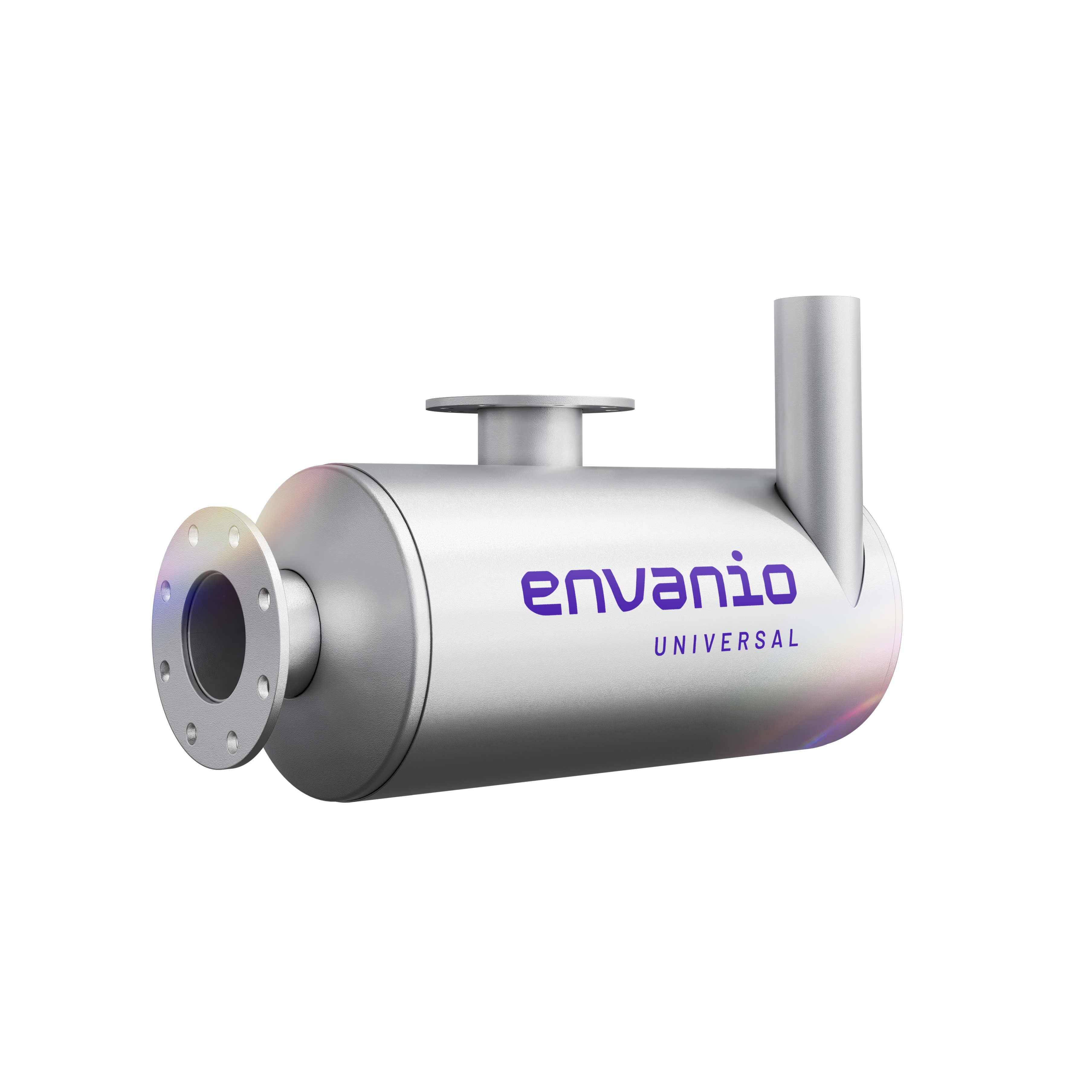
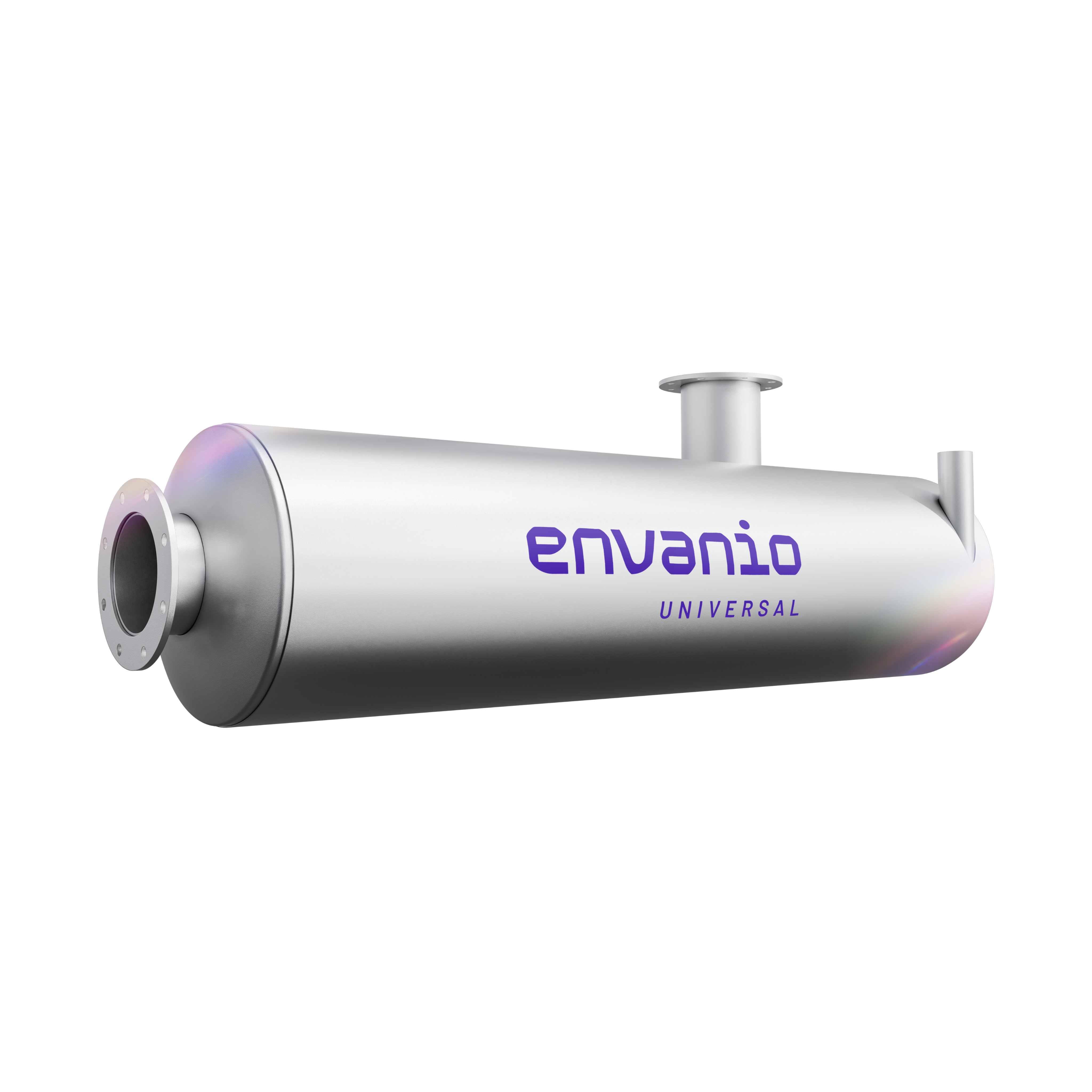
Remove liquids from gas-flow vacuum systems serving liquid-sealed rotary positive displacement blowers and liquid ring vacuum pumps with Envanio Universal’s vacuum pump liquid separator-silencers. Depending on the application, separator-silencers may be required for both the inlet (vacuum side) and the discharge (atmospheric side) of a vacuum system. An inlet separator removes most or all process liquid before it enters the vacuum pump, helping protect the equipment from corrosion and extending its service life.
High-Quality Performance
Our high-performance separator-silencers combine proven separation efficiency with exceptional sound attenuation for even the most demanding applications.

High Compatibility and Flexibility
The silencers are available in four standardized product lines and allow different maximum liquid flows depending on various drain sizes.

Durable Product Design
An inlet separator removes most or all process liquid before it enters the vacuum pump, helping protect the equipment from corrosion and extending its service life.
A Comparison of Our Vacuum Pump Silencer Series
The inlet separator-silencer must be sized to keep velocity below 5,500 ft/min at all operating phases, with a nozzle sized for the required flow rate. The discharge separator-silencer should be selected based on pressure drop. To help you select the right silencer type and size to meet your requirements, Envanio Universal offers an extensive line of vacuum pump silencer models.

RWVS/UWVS
Inlet Liquid Separator-Silencers
The RWVS and low-profile UWVS models provide corrosion protection for vacuum pumps by removing most of the process liquid before entering the vacuum pump. These separators are best suited for full vacuum conditions under critical applications which require inlet silencing.
- Pressure Drop Coefficient of 4.0 C
- Separation Efficiency of 99%
- Liquid flow from 15 to 1,200 GPM depending on drain size